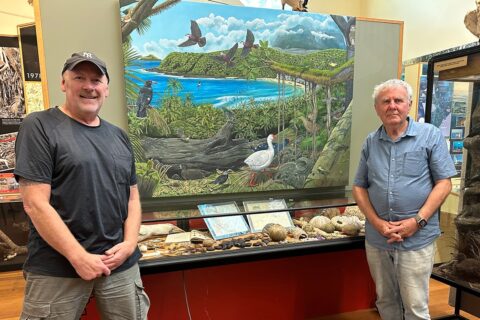
Artist Julian Hume installs new mural
Artist and palaeontologist Julian Hume visited the Museum and installed a canvas mural in the environmental gallery.

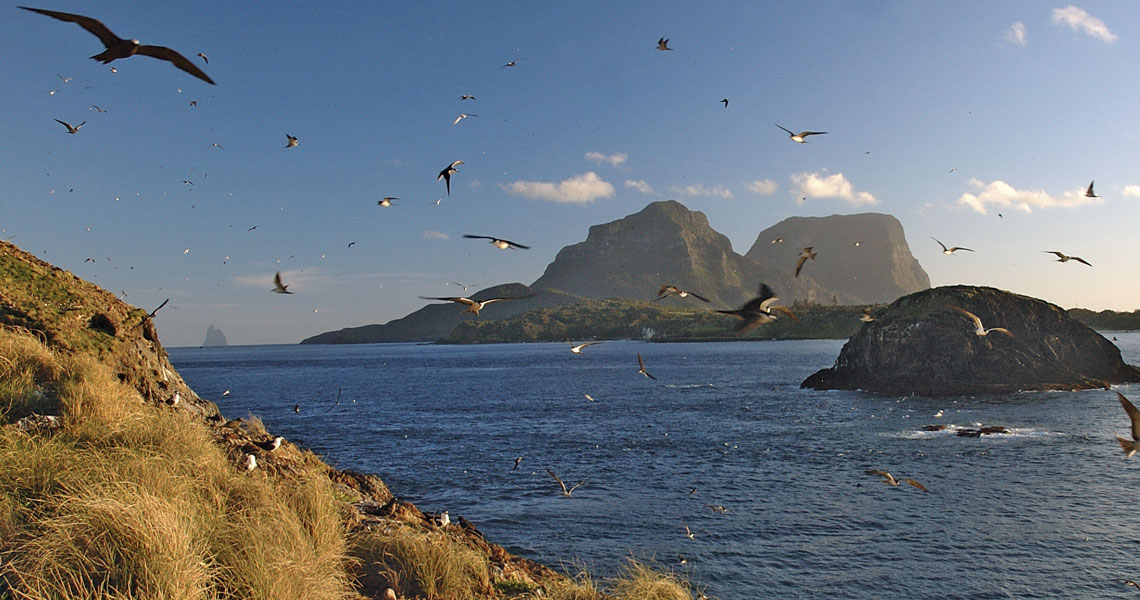

Artist and palaeontologist Julian Hume visited the Museum and installed a canvas mural in the environmental gallery.
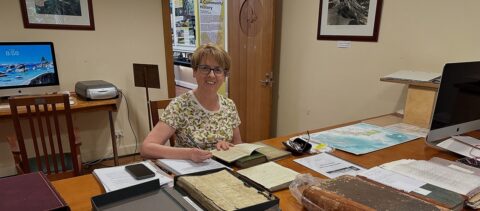
Visiting researcher Susan Johnson provided provided some insight into the island’s history.
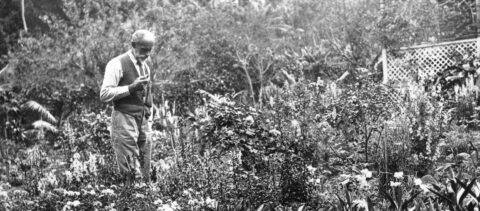
Philip Payten was a NSW surveyor who moved to Lord Howe Island in 1923, and helped form the local Lawn Bowls Club.
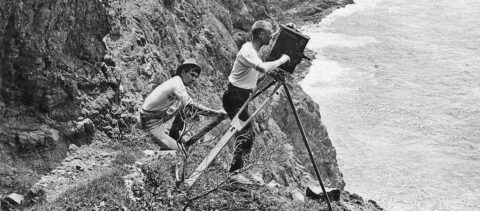
30th August 2025 marked the centennary of the death of naturalist Alan McCulloch